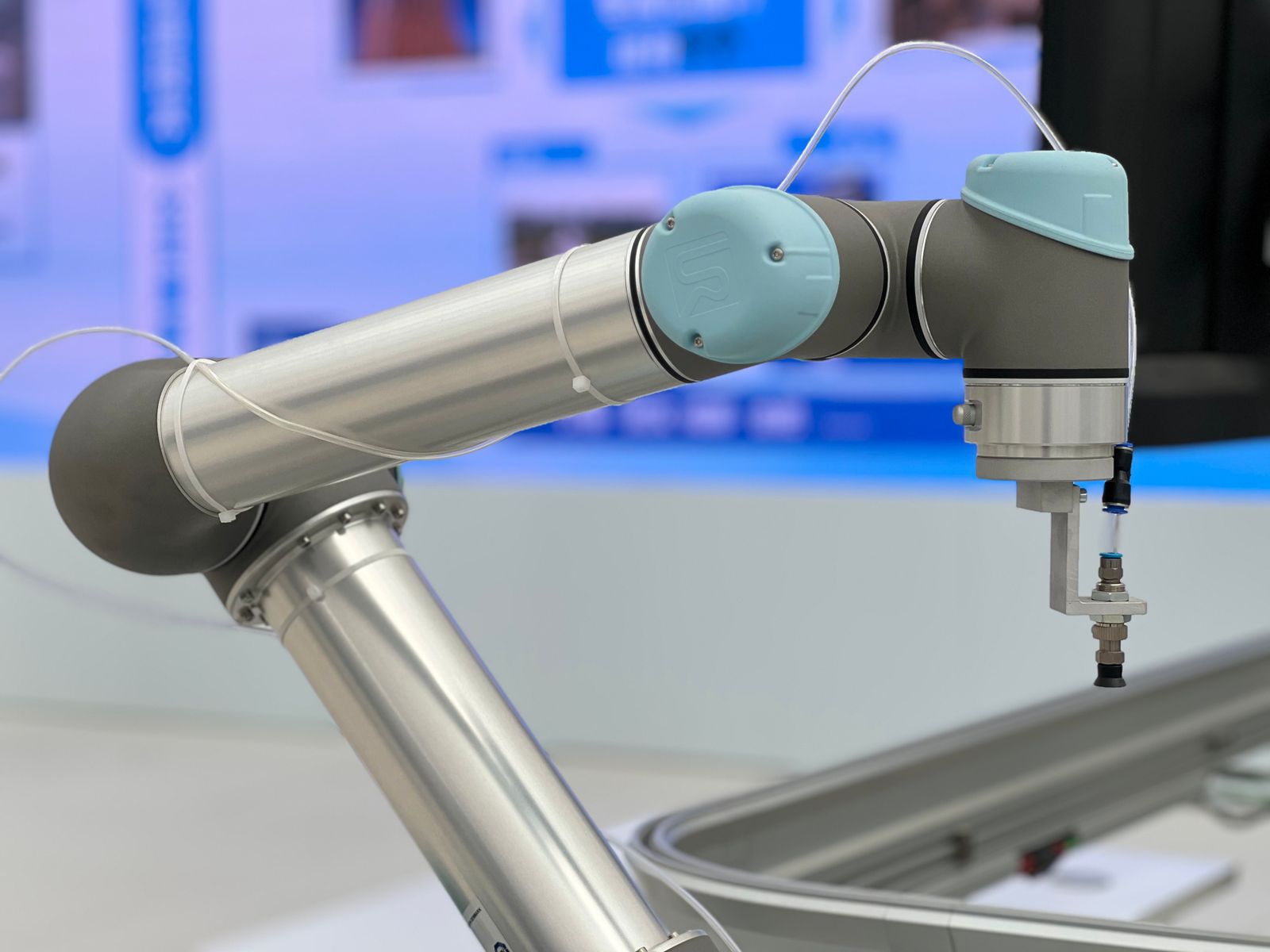
Manufacturing and robotics translation.
One terminology set across screens and manuals.
Robot manuals, MES/SCADA interfaces and CE machinery files — translated into the language of the destination market, with safety terminology mapped to the governing standard.
Equipment manuals, interfaces and safety files
Tell us what the documents are for, which source revision to use and who will read the translation.
Equipment and operator documents
Industrial robot manuals, cobot documentation, installation and commissioning guides, and training material.
Connected screens and manuals
MES / SCADA interface strings, approved labels, variables and the manuals that reference them.
Technical and safety files
CE machinery technical files and safety instructions, scoped to the destination markets.
One label, two places to check
Batch {batch_id}| Reference | Interface | Manual |
|---|---|---|
| Approved label | Batch status | Batch status |
| Variable | {batch_id} | Same token |
| Revision | Build reference | Linked version |
Review labels, variables, units and warning references in the actual build and the linked manual.
Different files. Clear project scope.
Published industrial projects across tire technology, power equipment, construction machinery and automotive components. Each case records its actual document scope and language direction.
 HF TireTech Group
Tire-technology documentation across multiple Asian languages.
English → Chinese / Thai / Malay / HindiRead project details → Shanghai Electric
Technical documentation.
Chinese → EnglishRead project details → XCMG Import & Export
Construction-machinery technical documentation.
Portuguese → ChineseRead project details → SAIC Huayu Automotive
Automotive-components technical and quality-system files.
Chinese → EnglishRead project details → Shuanglin Auto Parts
Auto-components technical documentation.
Chinese → EnglishRead project details → Shandong Iraeta Heavy Industry
Technical documentation in four target languages.
Chinese → English / Spanish / Arabic / FrenchRead project details →Why this is harder than it looks
The destination market decides the language
Machinery documentation has to reach the operator in a language they actually read. This is a market-access requirement, not a preference — equipment can be held up over documentation that is otherwise complete.
Safety terms are defined, not chosen
Terms used in safety instructions map to specific wording in the governing standard. Translating them freely — even accurately in a general sense — breaks the link between your documentation and the standard it is supposed to demonstrate conformity with.
Interface and manual drift apart
An MES or SCADA screen and the manual describing it are usually translated as separate jobs, often at different times. The operator then reads one term on screen and another in the manual, which is exactly when a procedure gets performed wrong.
What governs the work
EU Machinery Directive
Documentation required in the language of the destination market.
ISO 10218
Safety requirements for industrial robots and robot systems — safety terminology mapped to the standard.
Interface consistency
UI strings and manuals handled as one linked set so screen and documentation agree.
How a smart manufacturing project runs
Prepare the project
- Client UploadFiles, reference material and any existing termbase
Translate and verify
- AI TranslationDraft generation on a domain-tuned engine
- Terminology MappingTerms locked against the project termbase
- Expert ReviewDomain specialist validates accuracy and context
- QALISA QA 3.1 audit against defined error categories
Deliver and retain
- DeliveryFormat restored, delivered in the original layout
- Knowledge Asset UpdateTerminology fed back — every project improves the next
Selected work
Global rollout for an industrial-robot maker
Challenge A large industrial-robot manufacturer going global needed equipment manuals and safety files maintained across many markets without terminology drifting between revisions.
Solution A maintained termbase and translation memory across 12 languages, with expert review on safety-critical content and format restoration for every market.
- 12 languages maintained long-term
- Delivered across 20+ countries
- Consistent terminology across revisions
Bring the files. Make the open questions visible.
For a quote, include the source files, language direction, intended use and required date. Discuss your project →
Smart Manufacturing terminology
Selected bilingual references. The full terminology glossary remains available below.
“As a Fortune 500 company marketing products worldwide, we care deeply about the quality of our product manuals. We chose Angel Translation; the electrical-engineering manuals were highly satisfactory, at a price well below European and American firms.”
Smart Manufacturing questions
Send us a smart manufacturing document
Acknowledged in 4 hours, quoted in 24. Discuss confidentiality before sharing sensitive files.